
Things Worth Keeping
Fast away the old year passes but here are some reads worth salvaging

Hiya, Readers!
I know I’ve been writing about Frankenstein since last spring, so I thought I’d close down 2025 with a glimpse of some of the worthwhile books I’ve been reading this year while writing about Shelley’s classic.
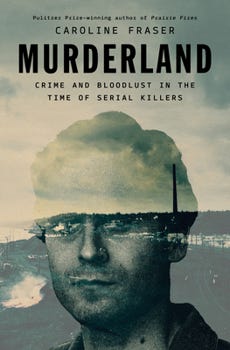
If you’ve followed Salvage closely this year you’ve already heard about Murderland: Crime and Bloodlust in the Time of Serial Killers, the June 2025 release from Pulitzer Prizewinner Caroline Fraser. I wrote about it around Halloween this past year, and if you missed that post it’s here. Fraser’s book is a chilling but fascinating read, not least because it raises questions about the role that toxicity may play in causing behaviors we tend to reduce to their moral implications. That’s not to say that if a toxin drives someone crazy and he becomes a serial killer he’s not culpable; but others may also be complicit in his crime. So, as I said: fascinating.
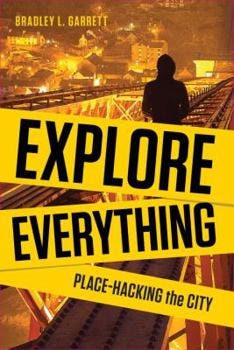
I just finished a book I’ve owned for years and partly read several times, Bradley Garrett’s Explore Everything: Place-Hacking the City. Garrett offers us an ethnography of urban explorers and of urban exploration—also known as “UE” or “UrbEx”—as a culture. I assigned a chapter of it for a unit leading up to an ethnography paper on a campus group for the Composition course I teach at State School. The undergrads enjoyed Garrett’s work, which is saying something because it’s technically a scholarly book; but it doesn’t read like one and the photos—the photos, people!—are spellbinding. Garrett and crew got into some of the deepest bunkers, catacombs, and metro systems, and climbed to the pinnacles of some of the tallest skyscrapers, construction sites, casinos, and landmarks in London, Paris, Chicago, Minneapolis, Vegas, Sydney, and other world-class cities. It’s a thoughtful read that made me wistful for the days when I jetsetted all over the world for academic conferences and archive research, which is a kind of exploration all its own. The photos from that kind of exploration aren’t nearly as sublime, though.
Speaking of the sublime, I’ve read part of David Nye’s book Seven Sublimes and I’m looking forward to returning to it this spring with a new friend who’s read Nye’s American Technological Sublime and is eager for more. Nye’s work came up in an experimental video post I made last summer on the Leo Marx/David Nye/Caroline Merchant nexus of American Studies. If you like cultural history, each of these authors’ work is worth reading.
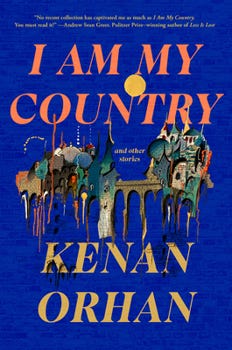
But in case you’re more into fiction and are looking for something newer than I’ve been writing about this year, check out Kenan Orhan’s debut short story collection I Am My Country. (Many of you are probably familiar with Khosrou Daniel Nayeri; he and Orhan are friends and there are some interesting points of connection in their respective bodies of work.) Orhan’s collection is eclectic and I so enjoyed the whimsicality of his magical realism, which is lighthearted, funny, and tragically pointed in its critique of authoritarianism in his native Turkey. He currently resides in Kansas City, which may interest my local readers.
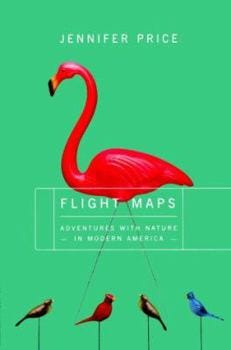
To return to cultural studies, though, have you read Jenny Price’s book Flight Maps: Adventures With Nature in Modern America? It’s a hilarious culture study of some of the funny-sad quirks of late-twentieth-century capitalism, including malls with nature inside them and the many adventurous cultural resonances of that late-mid-twentieth-century cultural icon, the pink plastic flamingo, seen in a front yard near you. (Especially if you live in Florida.) Price gets us to laugh and think about the ways the past several decades have shaped our consumption habits and the assumptions driving them, and while it’s not all great news, she comes at the ironies with a lightheartedness that makes it feel okay to make changes in how we consume. As such, Flight Maps is an uplifting read for the New Year.
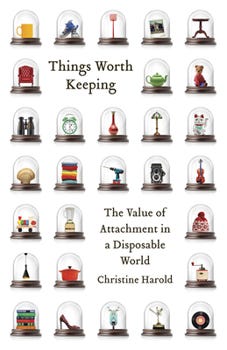
Finally, yesterday I started Christine Harold’s Things Worth Keeping: The Value of Attachment in a Disposable World and it’s all I hoped for and more so far. Harold pushes back on the Marie-Kondo-fication of our culture in the year or two leading up to the 2020 quarantine, during which many of us self-soothed by purging and some of us virtue-signaled by putting photos or video of our purges on socials. Harold’s point is that objects have longer lifecycles than we’re used to considering, especially when we’re tired of them and want our space back:
objects have their own life cycle—extraction, design, production, initial consumption and point of purchase, continued consumption or use, discarding or repurposing, and eventually disposal. For those of us who engage these objects as consumers, rather than as designers or developers or recyclers or disposal operators, most of this life cycle is obscured through an almost willful blindness. We know objects come from somewhere; we know they don’t disappear when we toss them into a nearby trash bin. But we often don’t need to think about these stages or care about them, unless we are motivated to become sufficiently aware, or more fundamentally if the object itself prompts us to value those other stages of the cycle.1
I won’t speak for you, but I do forget object permanence on occasion. So before you do your Happy New Year purge—and I know I have this backward—maybe acquire this book and give it a read? It may help you think more carefully about what you purge, and it will definitely help you think more carefully about how you purge.
Other than Fraser’s and Orhan’s work, not many of these books are very new. And I wouldn’t write a Substack like Salvage if I didn’t believe that reading old or older books wasn’t worthwhile. I hope you’re salvaging the past as you make your reading list. But that also expands the possibilities, so if you are, I’m extra grateful you’re also making time to read Salvage when you could be reading so many much-more-awesome works from across space and time.
Thanks for reading Salvage this year, and here’s to an exciting 2026!
Aaron
Dr. Aaron M. Long is a Lecturer in English at a flagship state university, and a Lecturer in Philosophy at a historied regional art school. He has published articles in Twentieth-Century Literature, The Nautilus, and Science Fiction Film & Television, among others. Here on Substack he has collaborated on The Deadly Seven. You can find him on LinkedIn and his website is here.
Christine Harold, Things Worth Keeping: The Value of Attachment in a Disposable World (Minneapolis, MN: University of Minnesota Press, 2020), 13-14.
I might have to check out "worth keeping" as I myself am a more is more kind of person (but need to temper it occasionally). I love to think about the objects that remain permanent in my "collection." I'm hoping Victorian/Enlightenment knick-knackery/specimen collection returns as style soon, and if not... well I'm already there.
Happy New Year, Aaron!